
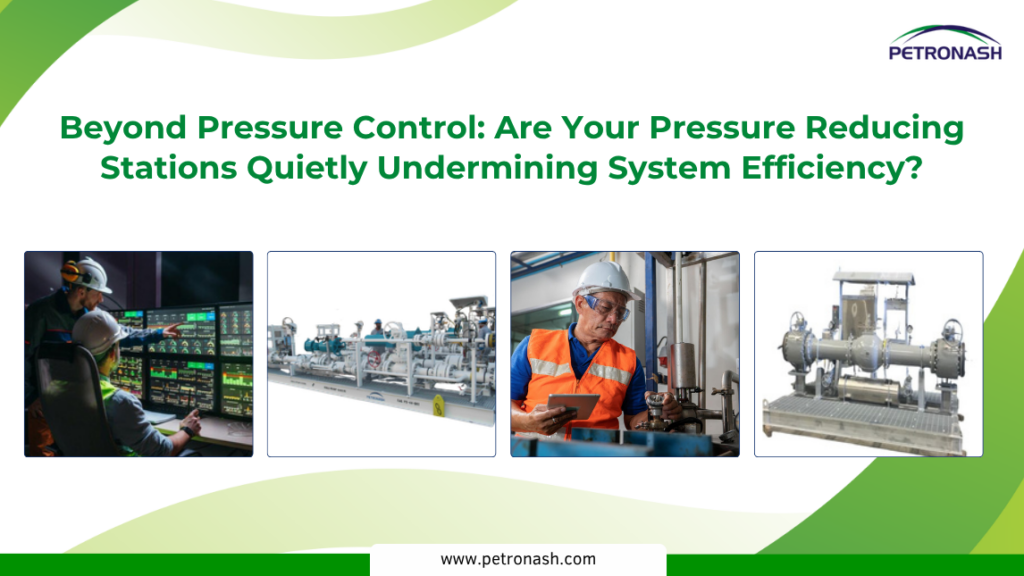
No alarms, no fluctuations, no obvious issues. But sometimes, that “perfectly stable” pressure is actually hiding bigger operational inefficiencies behind the scenes.
Your Pressure Reducing Station (PRS) might be the quietest thing in your facility
Many PRS systems end up compensating for improper sizing, excessive upstream pressure, fluctuating demand, or outdated control strategies. Everything appears under control, while hidden energy losses, reduced efficiency, and unnecessary stress on equipment continue in the background. True pressure stabilization only happens when the PRS is engineered as part of a fully optimized system.
The Hidden Cost of Pressure Drops
Excessive pressure drops across outdated or poorly sized PRS systems can waste significant energy through heat generation and turbulence. Over time, these unnoticed inefficiencies increase operating costs and reduce overall system performance, especially during varying demand conditions.
Static Systems Don’t Like Dynamic Operations
Many conventional PRS installations still operate based on assumptions made on day one instead of adapting to real-time process fluctuations. A dynamically responsive PRS equipped with advanced controls and smart instrumentation can better handle changing flow and pressure conditions while improving efficiency, reliability, and equipment life.
Why Petronash PRS Skids Are Different
Petronash PRS skids are engineered to go beyond basic pressure control. Each system is custom-designed for actual operating conditions to ensure accurate sizing, optimal performance, and minimal energy loss. Intelligent valve selection and advanced instrumentation help minimize cavitation, vibration, and wear while supporting performance monitoring and future predictive analytics integration.
Discover how Petronash PRS skids can help reduce energy losses, improve system reliability, and optimize long-term performance for your operations. To learn more, connect with our team at [email protected]